AppFolio vs. QuickBooks: We Compare Top Software for Property Accounting
January 14, 2026
.avif)
Quick Summary
This article compares three popular property accounting tools—AppFolio, QuickBooks, and Revela—highlighting their key features, pricing, strengths, and weaknesses. While AppFolio and QuickBooks are well-known for general property management and accounting tasks, Revela stands out with its specialized focus on trust accounting tailored to property management.
Not Sure Which Property Accounting Software is Right for You?
Managing property finances can be a complex task, but with the right software, you can reduce the hassle drastically. The options AppFolio, QuickBooks, and Revela each offer distinct features for property accounting. But, how do you know which one fits your needs?
AppFolio is often chosen by larger property management firms for its advanced tools and scalability. QuickBooks handles general accounting well, but usually needs extra setup for property-specific tasks. Revela stands out as a modern, property-accounting-first platform built specifically for daily operations.
In this Revela guide, we’ll break down the key features, pricing, and strengths of each tool so that you can decide which one is best for your property management needs.
Why Listen to Us?
We’ve spent years working with operators across single-family, multifamily, and student housing portfolios. Along the way, we saw how frustrating disconnected systems can be. That’s why we built a platform made for property accounting, with embedded banking workflows and trust-compliant ledgers that keep your books accurate and audit-ready.
Our platform supports mid-size to large portfolios with a proven track record of real‑time data access for tens of billions of dollars in assets. Our clients report scaling operations while gaining full visibility into their finances.
AppFolio vs. QuickBooks vs. Revela: Key Differences
Accounting & Financial Management
AppFolio offers a unified property‑ledger built for rent, payables, and owner distributions. However, it assumes a moderate level of accounting skill. QuickBooks excels at corporate bookkeeping, yet lacks native property operations features. Revela provides trust‑accounting and corporate‑level financials in one system, built for property operators.
Real‑Time Reporting & Dashboards
AppFolio delivers strong dashboards and key metrics for occupancy, rent, and collections. QuickBooks supplies detailed financial reports but lacks property‑specific insights. Revela offers live dashboards tailored to each building, asset type, and vendor, enabling transparent performance tracking.
Banking & Payment Workflows
AppFolio supports online rent collection and vendor payments, but may require third‑party tools. QuickBooks handles payments broadly but lacks property‑specific banking workflows. Revela integrates embedded banking, vendor payables, and receipt processing directly within the platform, reducing manual work.
Multi‑Property & Asset Type Support
AppFolio supports large portfolios across property types, but can get expensive for smaller operations. QuickBooks scales for your business size, yet lacks built‑in property‑specific structures. Revela manages mixed asset types and multiple buildings in one customizable system designed for real estate portfolios.
Ease of Use
AppFolio features property‑centric design but may fall short in accounting operations. QuickBooks is familiar and easy to start with, but will require add‑ons for property tasks. Revela emphasizes a user‑friendly interface, guided onboarding, and property‑specialized workflows, making complex accounting operations easier to manage.

Customer Support
AppFolio offers standard support plus a partner network for consulting and accounting help, though some users note slower responses for complex issues. QuickBooks delivers large‑scale support and community resources, yet it can feel generic and less focused on property‑management workflows. Revela provides U.S.‑based experts who understand property and accounting, offering fast and direct support without offshore queues.
Integrations
AppFolio features the AppFolio Stack™ marketplace and offers certified integrations with prop‑tech vendors to extend its platform. QuickBooks integrates with over 800 third‑party business apps, giving broad connectivity but often requiring extra setup for property operations. Revela is API‑first, built with custom integration options tailored to real estate portfolios, allowing clients to connect favorite tools or build bespoke workflows.
What is AppFolio?
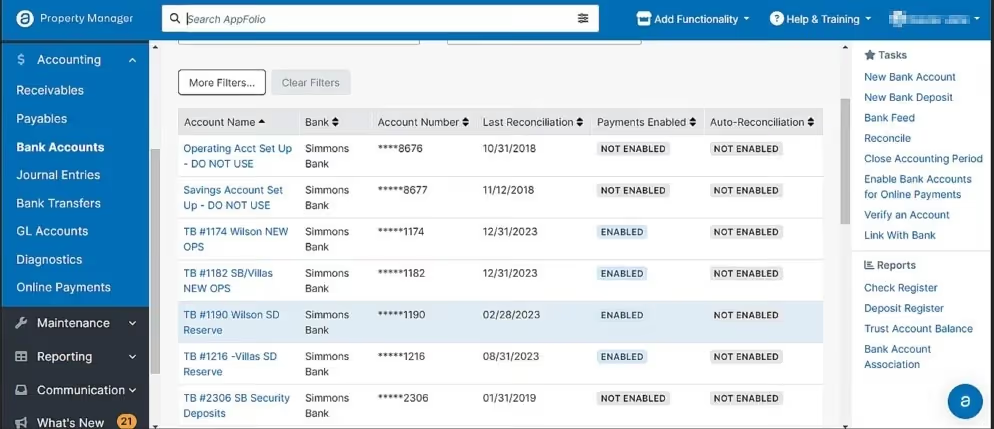
AppFolio is a property‑management platform built for mid‑ to large‑sized portfolios across residential, commercial, student housing, and associations. It combines accounting, leasing, maintenance, and owner/resident portals into one system. Users can access it via any internet‑enabled device and work with live data.
Key Features
- Property Accounting & Financials: Provides GAAP-compliant accounting, financial reporting, and budgeting tools to ensure accurate financial management.
- Maintenance Workflow: Allows creation of work orders, maintenance scheduling, and vendor tracking to streamline property upkeep.
- Marketing & Leasing: Includes AI-powered leasing assistants, online rental applications, and automated lease tracking to attract and retain tenants.
- Owner & Resident Portals: Enables residents to pay rent and owners to view statements anytime.
- Reporting & Dashboards: Offers real‑time metrics for income, occupancy, and performance.
- Integrations & API: Supports connection with third‑party tools and data export capabilities.
Pricing
AppFolio uses a tiered per‑unit pricing model with minimum monthly fees. For residential portfolios the Core plan starts at about US $1.49 per unit/month with a minimum spend around US $298/month. A Plus tier runs around US $3.00 per unit/month, while a Max plan hits about US $5.00 per unit/month for large portfolios.
Additional costs may apply for onboarding and optional services.
Pros and Cons
Pros
- Combines multiple property management functions in one platform.
- Robust built‑in accounting reduces reliance on external tools.
- User‑friendly interface with mobile access for on‑site management.
- Integrated marketing tools streamline tenant acquisition.
- Offers detailed real‑time reports and insights.
- Scalable for businesses of all sizes.
Cons
- Minimum monthly fees can be high for smaller portfolios.
- Limited flexibility in certain integrations compared to specialized tools.
- Customer support can be slow during peak times.
- Some features may require additional customization for complex property types.
What is QuickBooks?
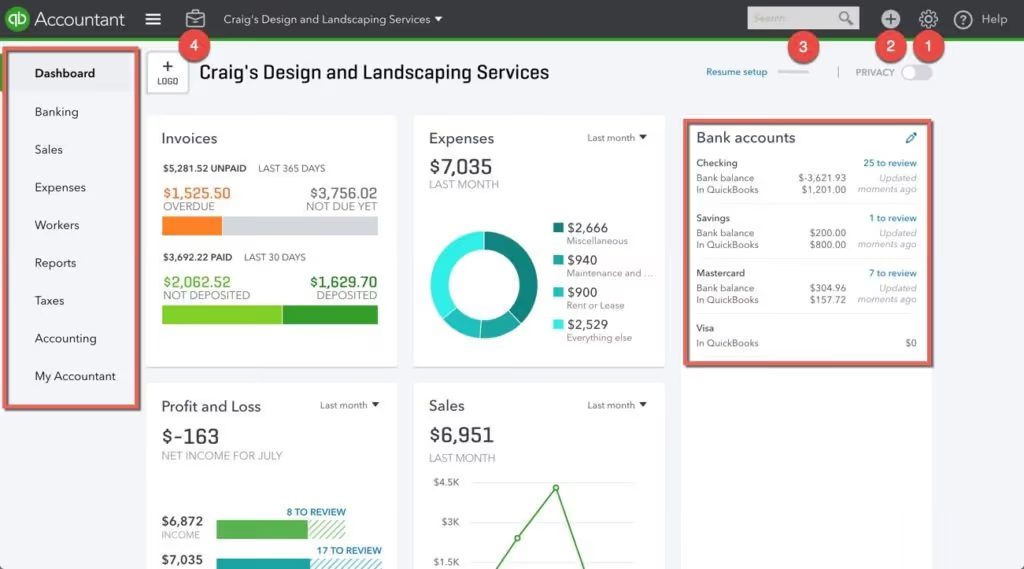
QuickBooks is a widely used accounting tool designed for businesses of all sizes. It handles income and expense tracking, invoicing, payments, and reporting in one place. The platform supports cloud access so you can work from any device and share data with your accountant instantly.
Key Features
- Income & Expense Tracking: Automatically imports transactions from bank and credit accounts and categorizes them for you.
- Invoicing & Payments: Lets you send custom invoices, accept online payments, and track status in real time.
- Reporting & Dashboards: Provides built‑in reports like profit and loss, sales by customer, and expense breakdowns.
- Mobile Access: Enables you to use the mobile app to manage books, capture receipts, and review data.
- Integration & Ecosystem: Connects with many third‑party apps (payroll, time tracking, e‑commerce) to extend functionality.
Pricing
QuickBooks Online offers tiered plans starting from around US$38/month (Simple Start) up to US$275/month (Advanced) for larger businesses. Promotional pricing often offers discounted rates for the first few months. Add‑ons like payroll or bookkeeping services may increase the total cost.
Pros and cons
Pros
- Broad set of accounting features for general business use.
- Easy to get started for smaller teams or businesses.
- Mobile app support for on‑the‑go management.
- Strong ecosystem of integrations for added functionality.
- Scales with business size through higher tiers.
Cons
- Not designed specifically for property accounting workflows out of the box.
- You may need extra setup or third‑party tools for multi‑property or trust accounting.
- Higher tiers increase cost significantly as your needs expand.
- Some users report the learning curve when tackling advanced features.
Revela: Best Alternative to AppFolio & QuickBooks
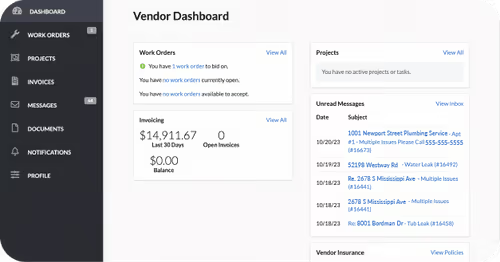
Revela is a property‑management and accounting platform built specifically for real‑estate operators managing portfolios across residential, multifamily, student housing, and mixed‑use assets.
Property managers come to Revela when their current software struggles with trust accounting compliance or creates reconciliation headaches. We replace fragmented tools with a unified platform that works across single-family, multifamily, mixed, and student housing portfolios.
Revela centralizes accounting, leasing, maintenance, and payments to give operators a single source of truth for financial and operational performance.
Key Features
- Unified Ledger Accounting: Consolidates receivables, payables, rental income, and fees in one audit‑ready ledger.
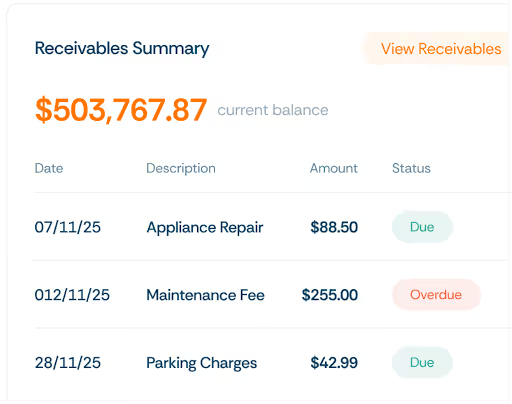
- Embedded Banking & Payments: Automates payables and vendor payments, integrates banking workflows to reduce manual work.
- Accurate Trust Accounting: Built to meet compliance requirements and deliver owner statements in hours, not days. Eliminates reconciliation errors that plague other platforms.
- Owner & Investor Portal: Provides building‑specific dashboards, real‑time reports, and direct communication with stakeholders.
- Flexible Portfolio Structure: Supports multiple asset types in one system and configures workflows per property, asset class or building.
- Maintenance Boards: Organize vendor requests, approvals, and status updates in one place with streamlined workflows.
- API & Data Export: Offers full access to raw data and connects with analytics, BI tools and external systems for advanced reporting.
- Onboarding & Migration Support: Includes guided data import and tailored setup so legacy systems move over smoothly.
Pricing
Revela’s pricing is custom‑quoted based on portfolio size and required features. Full quoting is made available after a demo and specification review.
Pros and Cons
Pros
- Built for property accounting workflows rather than general business books.
- Embedded banking and vendor payments lower operational friction.
- One system across operations, finance and owner/investor reporting.
- Strong mobile support for onsite teams.
- Flexible portfolio configuration adapts to mixed asset types.
Cons
- Some users report a learning curve when first deploying full advanced functionality.
AppFolio vs. QuickBooks vs. Revela: Feature Comparison
Why Do People Choose Revela?
Here are six reasons people choose Revela over AppFolio and QuickBooks:
1. Accounting Built for Property Operations: Revela supports trust and GAAP‑compliant accounting that works natively with property‑level, entity‑level, and portfolio‑level views. Many users report that AppFolio and QuickBooks require workarounds or multiple tools to handle complex ownership structures and reconciliation.
2. Embedded Finance Workflows: Revela offers integrated banking, payments, and vendor disbursements inside the platform. This reduces the need for separate systems and manual imports. With AppFolio or QuickBooks, payments and banking often depend on separate add‑ons or third‑party tools.
3. Tailored Support and Onboarding: Users highlight Revela’s strong onboarding process, hands‑on customer support, and fewer “generic” templates. The approach helps teams adopt faster and avoid tech‑stack gaps. With more generic tools like QuickBooks or broader platforms like AppFolio, the onboarding or customization burden can be higher.
4. Customizable Workflows: Unlike AppFolio and QuickBooks, which offer more rigid workflows, Revela’s platform allows for complete customization to fit unique business models and diverse asset types. Property managers can tailor everything from maintenance workflows to tenant communications, ensuring the software adapts to their specific needs and operational processes without forcing them to adjust their business practices to the software.
5. Strong User Satisfaction and Support: Revela’s customer support is often praised for its responsiveness and quality. Unlike some competitors, which may require users to go through generic support channels, Revela’s team works as a true business partner. Users report that their issues are handled quickly and effectively, and they benefit from personalized support tailored to property management and accounting challenges, making the user experience smoother and more efficient.
Make the Right Choice for Your Property Accounting
We’ve explored how AppFolio and QuickBooks stack up against Revela in the property accounting space. While Appfolio offers core features for property management and QuickBooks is great for general accounting needs, Revela stands out as a property management platform with native trust accounting, integrated finance workflows, and tailored support.
Revela simplifies property accounting with built‑in banking, customizable workflows, and seamless data management, offering a true all‑in‑one solution.
Ready to streamline your property accounting? Try Revela today.